
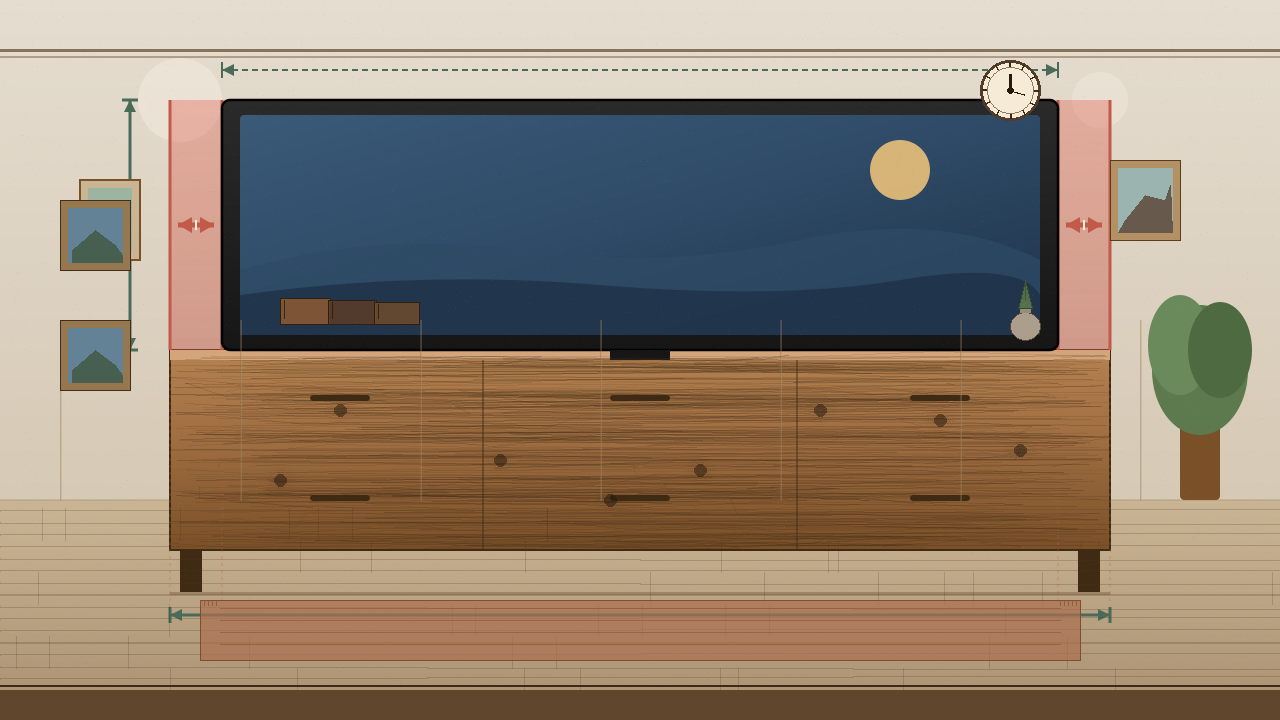
If you are still deciding which style of stand fits your space, our TV stands hub covers the full lineup, and our best TV stands for 55-inch TVs roundup pairs specific models with each width range below.
Why TV Stand Size Matters for a 55-Inch TV
A 55-inch TV is not a small object — it weighs 30 to 45 pounds without the stand, and most modern screens sit on narrow pedestal feet. Pair that with a narrow base and you have a real tip-over risk, especially in homes with children or pets who bump the screen. According to Hernest’s TV stand size guide, the stand should be sized to keep the TV’s center of gravity inside the stand’s footprint at all times.
Size also affects how the screen looks in the room. A stand that is too narrow makes the TV feel crowded, and components end up hanging off the edges. A stand that is too wide swallows the screen and makes the TV look like it is floating in a furniture canyon. The middle ground — 3 to 6 inches of clearance on each side — gives both stability and breathing room.
Then there is ventilation. TheSize.net’s 55-inch TV dimension reference notes that closed-back stands need at least 2 inches of clearance behind the TV for airflow. Without it, modern LED panels run hotter and shorten their lifespan.
55-Inch TV Physical Dimensions: What You Are Working With
The “55-inch” label on a TV refers to the diagonal screen measurement — not the width. The actual horizontal screen width of a 55-inch TV is 47.9 inches (121.8 cm), and the screen height is 27 inches (68.5 cm). These numbers come from TheSize.net’s measurement table, which sources its data from manufacturer spec sheets.
Add the bezel and the overall cabinet width comes to roughly 48.9 inches for most modern models. Bezel width has shrunk from about 1.5 inches on older TVs to 0.5 inches or less on current premium sets. Budget sets may still have 1 to 1.5 inches of bezel, so always measure your specific TV.
Why this matters for sizing your stand: a stand narrower than 47.9 inches will let the TV overhang the sides. That overhang shifts the TV’s center of gravity outside the stand’s footprint and creates a tipping hazard if the screen is bumped from the front. The minimum safe stand width is 47.9 inches, and the recommended width is 53.9 inches or wider.
For mounting purposes, most 55-inch TVs use a VESA 400 by 400 mm pattern on the back, though some models use 300 by 300 mm or 200 by 200 mm. Check your TV’s manual or spec sheet before buying a wall mount.
The 3-6 Inch Rule: How Wide Should a TV Stand Be?
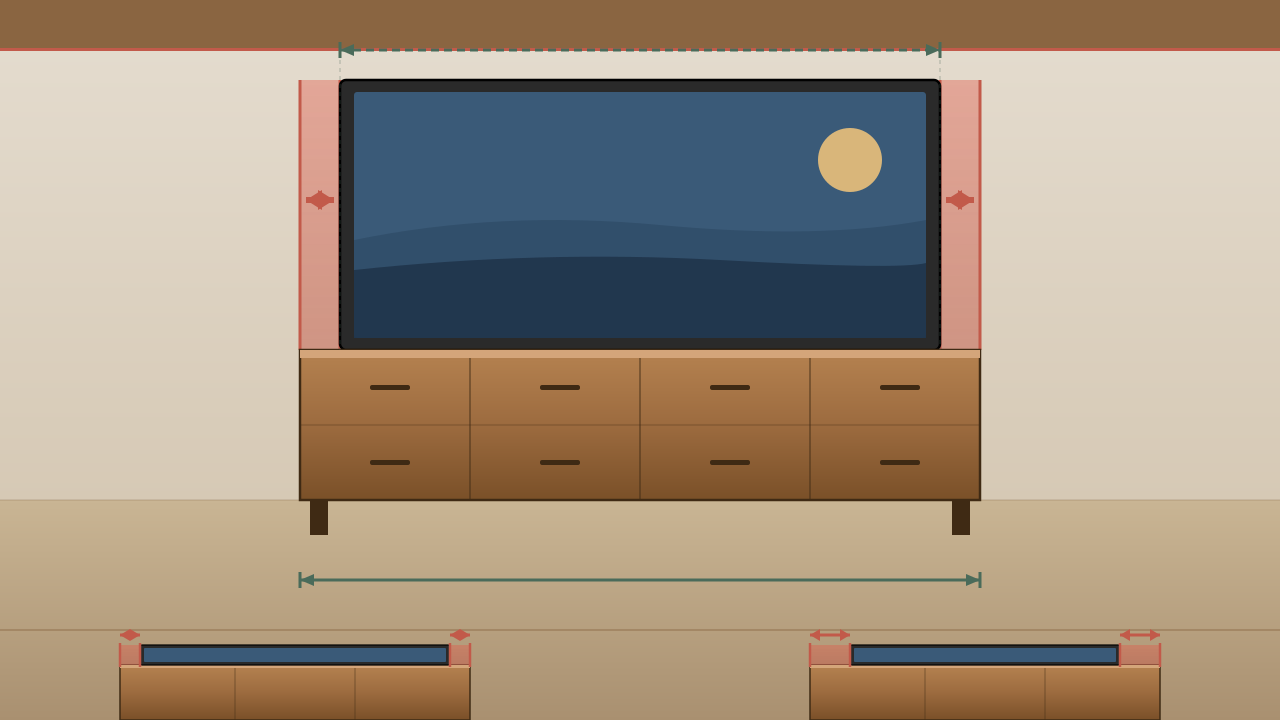
The 3 to 6 inch rule is the industry-standard formula for sizing a TV stand. It states that the stand should be 3 to 6 inches wider than the TV on each side, which works out to 6 to 12 inches wider in total. Hernest’s size guide calls this “the best practice for safety, stability, and visual appeal,” and it is the same rule used by furniture retailers like Cabinfield.
For a 55-inch TV with a 47.9-inch screen width:
- 3 inches clearance each side → stand at least 53.9 inches wide (the tight end, best for small rooms)
- 6 inches clearance each side → stand at least 59.9 inches wide (the loose end, best for large living rooms)
Most buyers land in the middle, with stand widths between 50 and 60 inches being the practical sweet spot. Going below 50 inches gives you a stand that hugs the TV too tightly, and going above 60 inches makes the screen look like a small island floating on a furniture pier.
TV Stand Size Chart: 43” to 85” (Quick Reference)
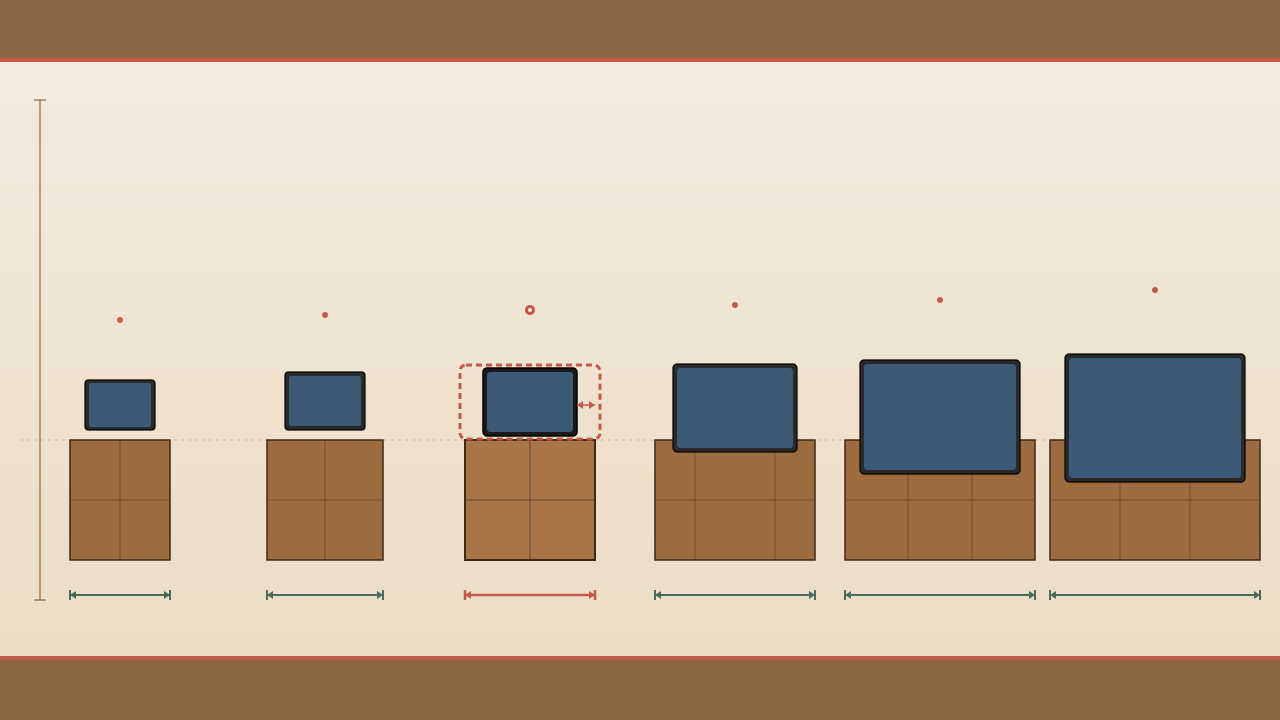
The 3 to 6 inch rule applies to every TV size, not just 55-inch. Here is the full reference table for the most common screen sizes, based on screen widths from TheSize.net and clearance guidance from Hernest.
| TV Size | Screen Width | Minimum Stand Width | Recommended Stand Width |
|---|---|---|---|
| 43” | 37.5 in | 37.5 in | 43 to 48 in |
| 50” | 43.6 in | 43.6 in | 49 to 54 in |
| 55” | 47.9 in | 47.9 in | 50 to 60 in |
| 65” | 56.7 in | 56.7 in | 60 to 70 in |
| 75” | 65.4 in | 65.4 in | 70 to 80 in |
| 85” | 74.1 in | 74.1 in | 80 to 90 in |
For 55-inch specifically, the most common stand widths on the market are 48, 50, 54, 58, and 60 inches. A 54-inch stand is the sweet spot for most living rooms — it gives 3 inches of clearance on each side and fits comfortably between a typical sofa and a TV wall. If you have a smaller living room, our best small TV stands roundup focuses on compact 48 to 54 inch options.
How to Measure Your Space for a 55-Inch TV Stand
Before you fall in love with a 60-inch mid-century stand, measure three things: the TV, the room, and the seating position. Skipping any of these leads to a stand that is technically the right size for the TV but wrong for the room.
Start with the TV itself. The diagonal screen size (55 inches) is a marketing number — you need the actual cabinet width, including the bezel. Measure left edge to right edge of the TV frame with a tape measure, not the screen. Modern 55-inch TVs range from 47.9 to 49 inches wide depending on bezel design.
Next, measure the room. The stand should sit with at least 6 inches of wall clearance on each side. For a 54-inch stand, that means a 66-inch wall minimum. Also measure the depth from the wall to the front edge of where the stand will sit — you need at least 24 inches total.
Finally, measure your seating distance. POVISON’s TV stand buying guide recommends sitting 1 to 1.5 times the screen height away from the TV for 4K resolution. For a 55-inch TV at 27 inches tall, that is roughly 4 to 7 feet.
Best TV Stand Height for 55-Inch TVs
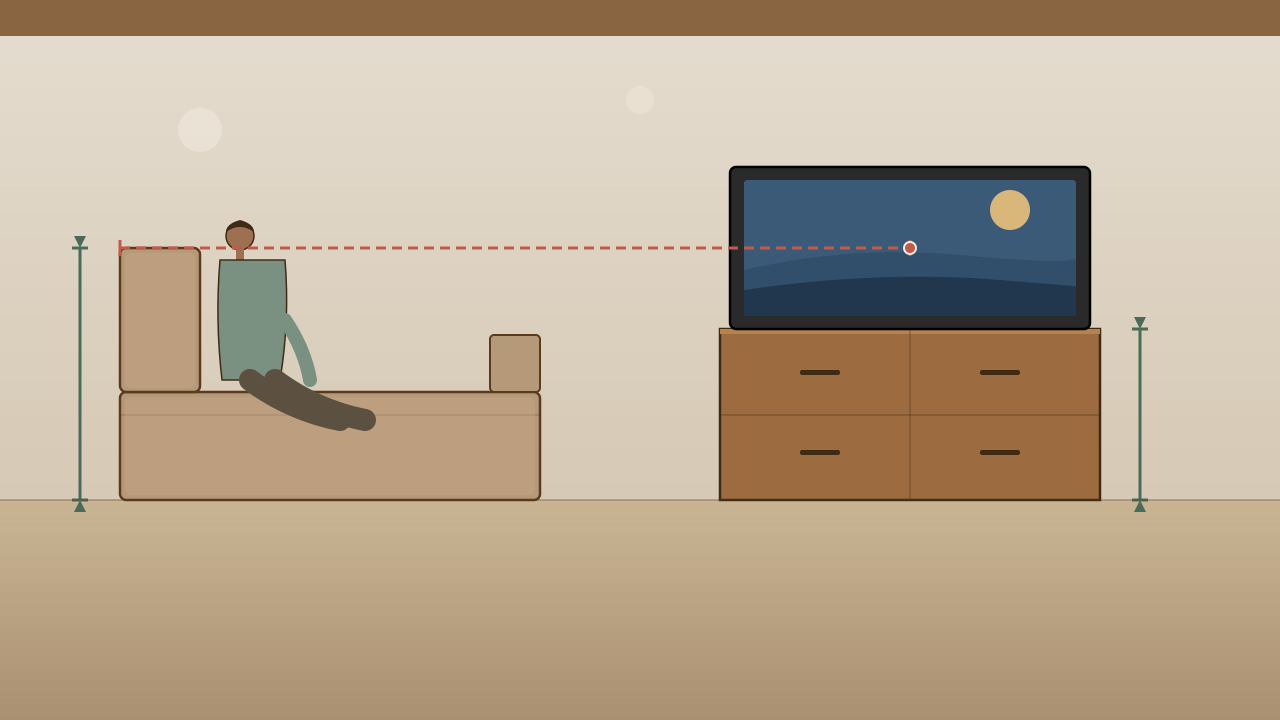
Stand height is the most overlooked spec in TV stand buying. The rule: the center of the TV screen should sit at your seated eye level. For an average sofa with a 17 to 19 inch seat height, the seated eye line is 40 to 44 inches off the floor. TheSize.net’s measurement reference puts this number at “approximately 42 in from the floor” for a typical setup.
A 55-inch TV is 27 inches tall, so half its height is 13.5 inches. Subtract 13.5 from your seated eye-level measurement to find your ideal stand height:
- Eye level 40 inches → stand height 26.5 inches (top of stand)
- Eye level 42 inches → stand height 28.5 inches
- Eye level 44 inches → stand height 30.5 inches
Most TV stands in the 20 to 28 inch height range work for 55-inch TVs at standard sofa height. If you have a low-profile modern sofa, drop to 16 to 20 inch stands. If you watch from a counter-height bar, look at 36 inch stands or go with a wall mount instead.
Best TV Stand Styles for 55-Inch TVs
Style matters as much as size when picking a 55-inch TV stand. The same 54-inch width works for a modern condo or a farmhouse living room — the style choice just changes how the room feels. Here are the six most common styles and what they do well.
Modern and Console
Clean lines, low profile, 20 to 24 inch height, usually with a mix of open shelves and closed cabinets. Best for 55-inch TVs in minimalist living rooms. The Furologee TV Stand for 55” TV at $59.99 fits a 55-inch screen in a 51-inch footprint — a good example of a small-room modern stand. See our best modern TV stands roundup.
Modern Farmhouse
Barn-door cabinets, 28 to 32 inch height, lots of closed storage. The farmhouse look works in family rooms and casual living rooms, and the barn doors let you hide components when the TV is off. Pairs well with shiplap walls or neutral palettes. The Walker Edison Richmond Barn Door TV Stand at $317.56 is a farmhouse-stand archetype in this size class.
Mid-Century Modern
Four splayed legs, 18 to 22 inch height, open shelves. The low profile makes mid-century stands a good fit for small rooms where a taller stand would crowd the TV. The Ameriwood Home Carson TV Stand at $45.98 handles 50-inch sets comfortably and can stretch to 55 inches with a curved-screen TV.
Industrial
Metal frame with reclaimed wood or pipe accents, 24 to 28 inch height. Industrial stands handle weight well — useful if you have a heavier 55-inch set or a soundbar with a subwoofer. The Yaheetech TV Stand for 65” TV at $149.99 uses engineered wood on a metal frame.
Corner
Triangular or pentagonal footprint, 22 to 26 inch height. Corner stands reclaim otherwise dead floor space and work for 55-inch TVs in rooms where a rectangular stand would block a doorway. The EVAWOO Corner TV Stand with Mount is the only corner model in this size class that ships with a built-in universal swivel mount. Our best corner TV stands guide has more corner-fit models.
Floating and Wall-Mounted
Saves all floor space, 12 to 18 inch height when paired with a wall-mounted TV. Floating stands typically support 50 to 100 pounds of media components above the floor. Useful in studio apartments. For larger 55-inch setups, the Mordchil HF Floating TV Stand at $79.99 supports TVs up to 65 inches and ships with a drawer plus two open shelves for media components.
Material and Build Considerations for 55-Inch Stands
Material affects three things: weight capacity, longevity, and price. TheSize.net and IKEA’s TV bench spec sheets cover the same five material categories that most furniture retailers use, so this is the standard breakdown.
Solid Wood
Heaviest, most durable, $200 to $600+. Solid wood handles 55-inch TVs easily and adds real weight to the bottom of the stand (good for tip-over stability). The downside is price — solid wood costs two to three times more than engineered wood. Check our best wood TV stands roundup for solid wood options that fit a 55-inch TV.
Engineered Wood and MDF
Most common material for the 50 to 200 dollar price range. MDF (medium-density fiberboard) with a wood-look veneer handles 55-inch TVs as long as the stand has a real wood or metal internal frame. Avoid all-MDF stands if you move often — the corners chip easily during disassembly.
Metal Frame
Strongest material for the price, $100 to $300. Metal-frame stands pair with wood or glass shelves, and the frame itself can support 100+ pounds without flex. A good fit if your 55-inch TV is on the heavier end (45+ pounds) or if you stack a soundbar and components on the same surface.
Glass Top
Looks modern, scratches easily, and the weight limit varies widely. Glass-top stands usually rate for 50 to 80 pounds total (TV plus components), which works for a 55-inch TV if you do not add a heavy subwoofer. Glass is also the easiest material to clean.
Weight Capacity Check
A 55-inch TV weighs 30 to 45 pounds. Add a soundbar (5 to 15 pounds), cable box (3 to 5 pounds), and gaming console (6 to 10 pounds), and your stand needs to support 50 to 75 pounds minimum. Look for stands rated for at least 80 pounds to leave a safety margin.
Decision Tree: How to Choose the Right 55-Inch TV Stand
If you have measured your TV and your room, picking the right stand comes down to four decisions. Use this decision tree to land on the right model without second-guessing.
Step 1: Confirm Stand Width
Start with the 3 to 6 inch rule. For a 55-inch TV (47.9 inch screen width), pick a stand 50 to 60 inches wide. If your room is under 8 feet wide, go with 50 inches. If your room is 10 feet wide or more, go with 54 to 60 inches.
Step 2: Confirm Stand Height
Measure your seated eye level (typically 40 to 44 inches from the floor for an average sofa). Subtract 13.5 inches (half the TV height). The result is your ideal stand height. Most 20 to 28 inch stands work for standard sofas.
Step 3: Pick Stand Style
Choose the style that matches your existing furniture and the room’s overall feel. Modern and console for minimalist decor, modern farmhouse for casual family rooms, mid-century for small spaces, industrial for high-traffic areas, corner for awkward layouts, and floating for studio apartments. For a 55-inch TV in a small condo, a compact modern stand like the JUMMICO TV Stand for 65” TV at $89.99 fits a 55-inch screen in a budget-friendly footprint. Once you have picked a style, jump to our commercial roundups for specific model recommendations.
Step 4: Confirm Material and Weight Rating
Pick solid wood for longevity, engineered wood for budget, metal for strength, or glass for modern looks. Confirm the weight rating is at least 80 pounds (TV plus components plus safety margin). The Ameriwood Home Carson TV Stand at $45.98 — rated for 50-inch sets and handles up to 60 pounds total — is a typical engineered-wood spec to compare against.
Step 5: Verify Cable Management
Look for a stand with a rear cutout, a back panel gap, or an open back. The Walker Edison Richmond Barn Door TV Stand routes cables through a built-in channel behind the closed barn doors. If your stand has no cable management built in, plan for a $10 to $20 aftermarket cable cover.
Common Mistakes to Avoid
Five mistakes show up over and over in 55-inch TV stand buying. Skip these and you will be ahead of most buyers.
Buying a Stand Narrower Than the TV
A 55-inch TV is 47.9 inches wide at the screen. A stand narrower than 48 inches will leave the TV overhanging the sides, creating an aesthetic problem and a stability problem (the center of gravity shifts outside the stand’s footprint). Always pick a stand at least 50 inches wide.
Ignoring Stand Depth
Modern 55-inch TVs are slim (under 3 inches deep), but the stand’s depth still matters. Stands under 15 inches deep cut off the surface area you need for a soundbar, cable box, or gaming console. Pick a stand at least 15 to 18 inches deep.
Skipping the Weight Rating
Every stand has a maximum weight rating, and exceeding it voids the warranty. Add up the weight of your TV, soundbar, cable box, and gaming console, then pick a stand rated for at least 20 percent more than that total.
Wrong Stand Height
A stand that is too high or too low ruins the viewing experience. If the TV’s center is more than 6 inches above your seated eye level, you crane your neck upward. If it is more than 6 inches below, you tilt your head down. Both positions cause neck strain over a long movie or gaming session.
Forgetting Cable Management
Closed-back stands without cable cutouts leave HDMI cables and power cords tangled behind the TV. Pick a stand with a rear gap, a removable back panel, or a built-in cable channel.
Safety Notes for 55-Inch TV Stands
A 55-inch TV stand setup has three safety considerations worth flagging before you finalize the install.
First, anti-tip hardware. Most modern 55-inch TVs come with an anti-tip strap that anchors the TV to the wall behind the stand. Never skip this step — a 35 pound TV tipping forward off a stand can seriously injure a small child who pulls on the screen or tries to climb the stand. Mount the strap to a wall stud, never just to drywall anchors.
Second, store the stand against a flat wall with no gaps. An uneven floor (common in older homes) can cause the stand to rock gently, which over time loosens the TV’s mounting bolts. Use furniture shims under the shorter legs if your floor is not level. Store heavy components on the lower shelves of the stand to keep the center of gravity low.
Third, never place the TV or stand near a heat source. A TV stand next to a radiator, fireplace, or sunny window will warp over time and may damage the TV. TheSize.net’s alcove guidance specifically warns against recessing a 55-inch TV into a tight wall cavity with no ventilation — leave at least 2 inches of clearance on each side and 4 inches behind for heat dissipation.
Frequently Asked Questions
What size TV stand for 55 inch TV?
A 55-inch TV needs a stand at least 48 inches wide (the TV’s actual width is 47.9 in). For best stability, choose a stand 50 to 60 inches wide — 3 to 6 inches of clearance on each side. Stand depth 15 to 18 inches; height should place the TV’s center at your seated eye level.
How wide should a TV stand be for a 55-inch TV?
The stand should be 50 to 60 inches wide for a 55-inch TV. A 48-inch stand is the absolute minimum (matching the TV’s 47.9-inch screen width), but narrower causes the TV to overhang. Measure your TV’s actual width, not the diagonal.
What is the best height for a TV stand for a 55-inch TV?
The best stand height is 20 to 28 inches, so the screen’s center sits at your seated eye level (about 42 in from the floor for an average sofa). Subtract 13.5 from your seated eye-level measurement to find the stand height.
Should a TV stand be wider than the TV?
Yes — specifically 3 to 6 inches wider on each side, or 6 to 12 inches wider in total. This 3 to 6 inch rule is the industry standard for safety, stability, and visual balance.
Can a 55-inch TV fit on a 48-inch stand?
A 55-inch TV can technically fit on a 48-inch stand (since the screen is 47.9 in wide), but it is not recommended. The TV will sit flush with both edges, leaving no clearance for ventilation. A 50 to 60 inch stand is the practical range.
How much depth does a 55-inch TV stand need?
A 55-inch TV stand needs 15 to 18 inches of depth for most setups, with 15 to 20 inches being the practical range. A closed-back stand needs at least 6 to 8 in of wall clearance.
What is the standard VESA mount size for a 55-inch TV?
Most 55-inch TVs use a 400 by 400 mm VESA mount pattern, though this varies by brand and model. Always check your specific TV model’s manual before buying a mount.
Final Thoughts
The right 55-inch TV stand comes down to three numbers: width (50 to 60 inches), depth (15 to 18 inches), and height (20 to 28 inches for standard sofas). Once those three numbers are locked in, the style and material choices become personal preference. For a quick way to skip the research and shop specific models by width, jump to our best TV stands roundup, our best modern TV stands guide, or our best small TV stands guide for compact rooms.